
Moving abroad, marrying an international citizen, or settling an estate across borders brings a unique set of challenges. One of the most common—and often most frustrating—hurdles is proving your major life events to a foreign government.
Whether you need to register a birth, finalize a divorce, or apply for a visa, handing over a standard Japanese document usually isn’t enough. At Dave Higgins Office, we specialize in the trifecta of international document preparation: Reissue, Translation, and Apostille Authentication.
Here is a breakdown of what you need to know to get your documents recognized internationally.
1. Document Reissue: Starting with a Fresh Copy
Many foreign governments and immigration authorities will not accept personal documents that are older than three to six months. Even if you have your original Marriage Certificate or Koseki Tohon safely tucked away in a filing cabinet, you will likely need to request a newly issued copy from the local municipal office.
We frequently assist clients in navigating Japanese bureaucracy to obtain freshly issued copies of:
- Birth Certificates (often derived from the Family Registry or Birth Registration Certificate)
- Marriage Certificates (Certificate of Acceptance of Marriage Notification)
- Divorce Certificates
- Death Certificates
2. The Koseki Tohon (Family Registry)
In Japan, the Koseki Tohon acts as the master record of a family’s vital statistics. Because Japan does not issue standalone birth or marriage certificates in the same way many Western countries do, the Koseki Tohon is often the exact document a foreign government requires to verify your birth, parentage, marriage, or divorce.
Obtaining this document can be difficult if you no longer live near your registered domicile (honseki-chi). Our office can facilitate the reissue of your Family Registry, ensuring you have the official foundation required for the next steps.
3. Certified Translation: Bridging the Language Gap
Once you have your freshly issued Japanese documents, the receiving country needs to be able to read them. A standard, informal translation won’t pass legal scrutiny. Immigration bureaus, courts, and foreign registries require a certified translation.
Translating legal documents—especially the Koseki Tohon, which features specific legal terminology and complex historical formatting—requires precision. Our certified translation services ensure that every detail of your Birth, Death, Marriage, or Divorce records is accurately localized into English while maintaining the exact legal meaning of the original Japanese text.
4. Apostille Authentication: The Global Stamp of Approval
Having a new document and a perfect translation is great, but how does a foreign government know the Japanese document isn’t forged? This is where the Apostille comes in.
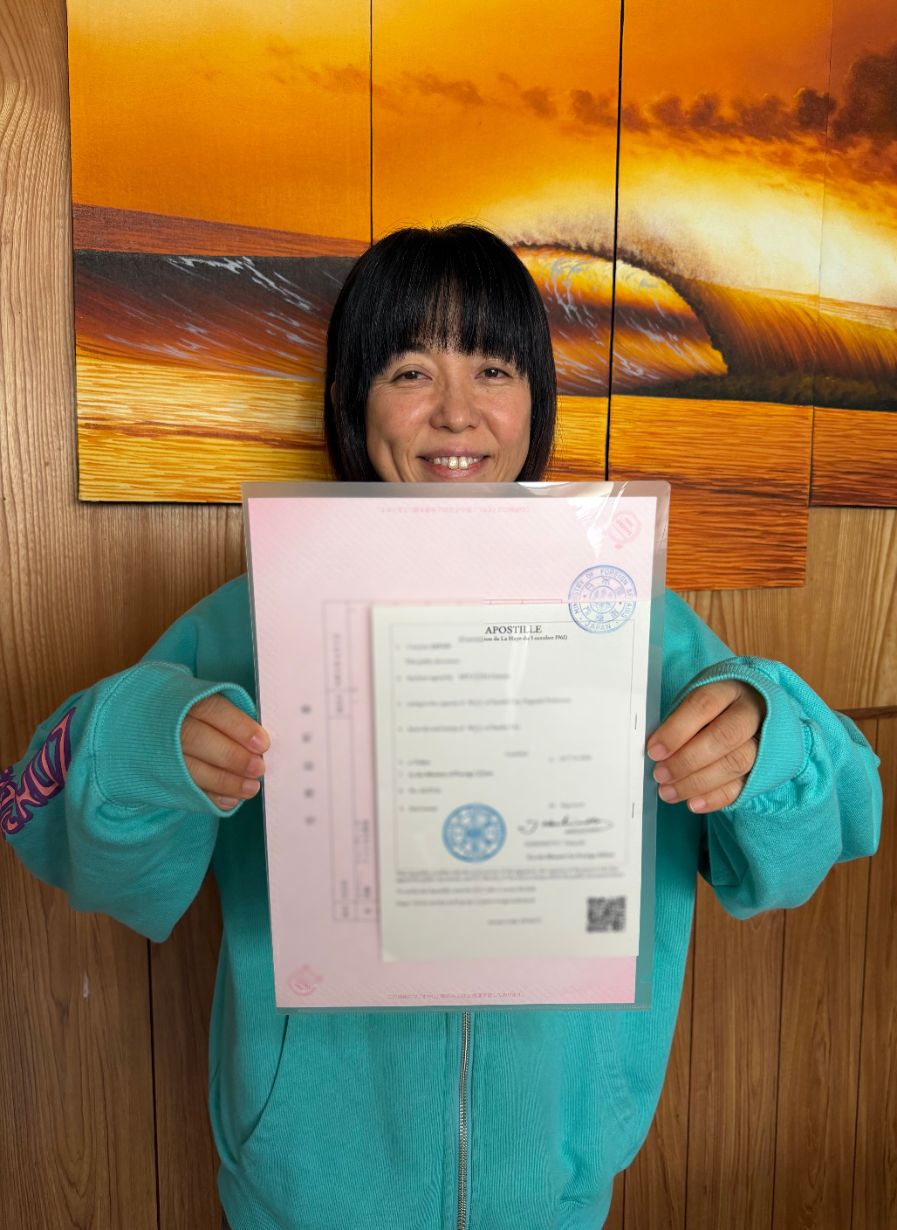
An Apostille is an official certificate issued by the Japanese Ministry of Foreign Affairs (MOFA). Under the Hague Convention, this stamp authenticates the signature and seal of the official who issued your document, making it legally valid in any other country that is a member of the Hague Apostille Convention. If you are submitting your Koseki or marriage certificate to a country like the US, UK, or Australia, an Apostille is almost always a mandatory requirement.
How Dave Higgins Office Can Help
Dealing with municipal ward offices, managing certified translations, and coordinating with the Ministry of Foreign Affairs is a time-consuming process—especially if you are currently outside of Japan or managing a busy schedule.
At Dave Higgins Office, we offer a comprehensive, end-to-end service. From pulling the reissued documents and translating the complex legal text, to securing the final Apostille authentication, we ensure your paperwork is flawless and ready for international use.
Ready to get your documents processed? Visit us at Dave Higgins Office to learn more about how we can streamline your document authentication today.